Give Their Next Potty Break a Clearer Cue With This Wireless Pet Doorbell Set Featuring a Sage Touch Button and Plug-In Receiver
Give Their Next Potty Break a Clearer Cue With This Wireless Pet Doorbell Set Featuring a Sage Touch Button and Plug-In Receiver
無法載入取貨服務供應情況

Give Their Next Potty Break a Clearer Cue With This Wireless Pet Doorbell Set Featuring a Sage Touch Button and Plug-In Receiver
A Small Signal for an Everyday Need.
Your dog is by the door again. A pause. A look back. Perhaps you notice immediately. Perhaps you are halfway through something else and trying to work out what that look means.
The Wireless Pet Potty Doorbell introduces a simple idea to that familiar moment: a dedicated button you can incorporate into a consistent, supervised door-side routine. A broad sage-colored press surface sits inside a low cream housing, paired with a separate plug-in receiver.
It is a training aid, not a translator. Your dog still needs time, guidance and regular opportunities to go outside. But if the format suits your household, it gives you one more cue to introduce thoughtfully.

Give the Doorway Routine a Consistent Starting Point
A dedicated spot can make a new routine easier for the people in the home to follow. Instead of moving a button between rooms each day, choose a suitable place near the exit you normally use, clear of the door swing and the walking path.
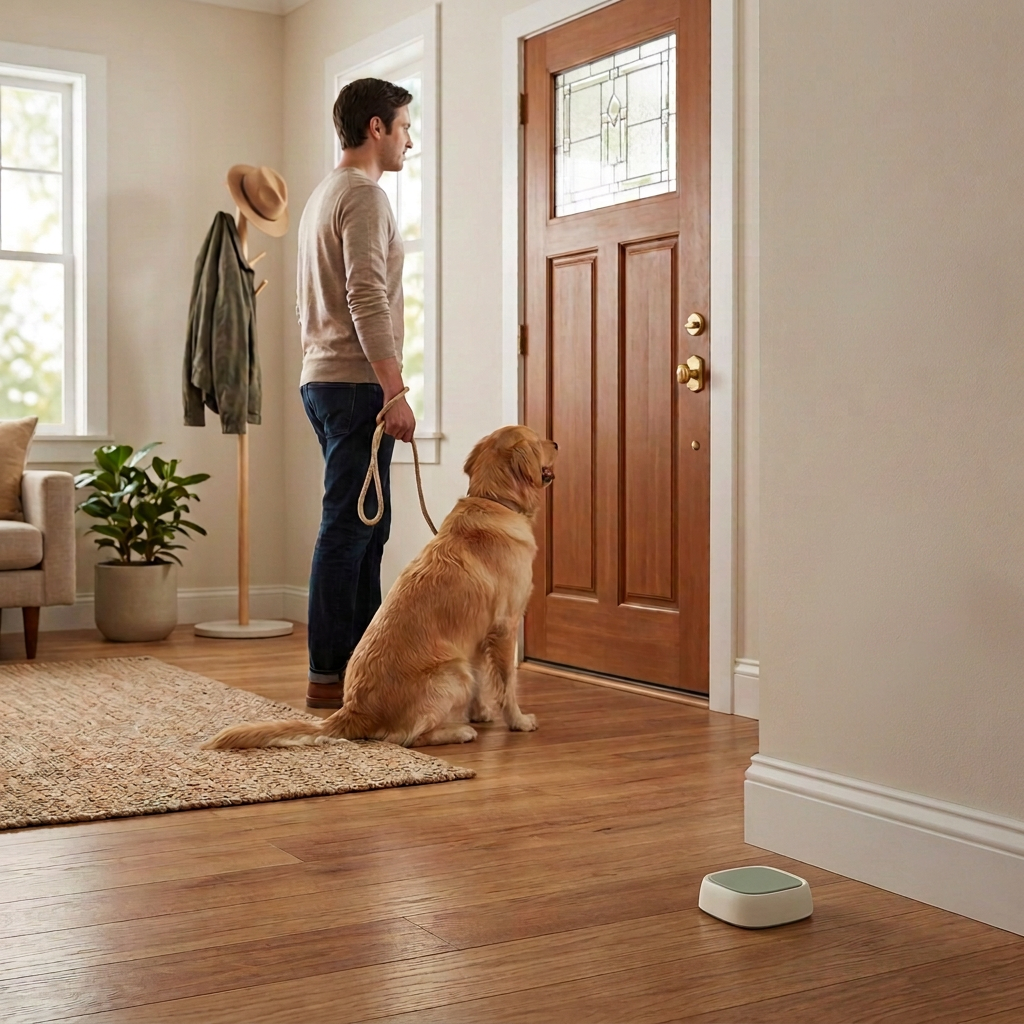
The door-side scene illustrates a voluntary paw touch while an owner stays close. It is not a promise that every dog will understand the device immediately or press with the same amount of force. Sensitivity and suitability need to be checked with the actual unit.
Watch your dog's existing signals and maintain regular toilet breaks. Do not wait for a button press when your dog already needs to go out. The device is an optional addition to your routine, not a condition your dog must meet before receiving care.

A Broad Surface Without Visual Clutter
The sage press area occupies most of the top, surrounded by a rounded cream rim. There are no printed commands or character graphics on the pictured button, just a contrasting surface that is easy to identify within the design.
The low square body keeps the visual profile understated beside pale floors, timber trim and neutral walls. Its simple shape also makes it easy to inspect for dirt or damage before an introduction.
- Broad press area: a distinct sage-colored top within the cream housing.
- Low rounded button body: a floor-level arrangement shown in the use scenes.
- Separate plug-in receiver: the sound-unit component is distinct from the pet-facing button.
- Front speaker perforations: a clear physical detail on the receiver.
- Small side control: consult the actual instructions for its function.
- Muted cream and sage palette: an understated look for shared home spaces.
The top is a press surface, not evidence of touch-free sensing. Activation force, transmitter power source and supported placement methods require the final model's specifications.

Introduce the Idea Gently
Start with the manufacturer's setup instructions, including the correct power arrangement and any required pairing. Check the device yourself before inviting your dog to approach. A brief demonstration can introduce the object without demanding a response.
Allow your dog to look, sniff and step away. If you demonstrate a press, do it without holding their paw against the surface. Watch how they respond to any sound and stop if they seem startled or uncomfortable.
Keep early sessions short and positive. A voluntary approach may be the first thing you acknowledge, rather than expecting a complete new routine in one attempt. For an individualized training plan, work with an appropriate qualified professional.
The demonstration image illustrates positioning and interaction. It does not establish sound level, response time or a complete installation method.

Check the Receiver Before You Choose a Socket
The receiver is shown with a rounded cream body, a perforated front speaker area and a small side key. The back has two flat US-style plug blades. This is the plug format represented in the product design, not a universal electrical connection.
Confirm the actual receiver's rated input voltage, frequency and plug requirements against the electrical supply where you intend to use it. A matching plug shape alone does not establish compatibility, and a plug adapter does not automatically convert voltage.
Use only as directed, in a suitable dry indoor location where pets and children cannot reach the receiver or socket. Keep the housing clear of fabric and other obstructions. Do not use a damaged device, bent blades or an insecure outlet, and do not open the casing.
No electrical certification, worldwide compatibility or particular power rating is claimed from these images. Verify the final supplied model before connecting it.

Make the Reward About a Comfortable Introduction
A little encouragement can belong in the first few sessions. The reward scene shows an owner acknowledging a dog near the button, without forcing contact or turning the device into something the dog has to confront.
Use small, diet-appropriate rewards and account for them in your dog's daily intake. Keep food off the device and do not leave treats on top where licking or chewing could become the main activity.
The goal is a calm, repeatable routine, not a promise of fewer accidents overnight. Household consistency, your dog's needs and the way you introduce the cue all matter. No device can determine why a dog pressed it or whether they truly need a toilet break.
If progress is slow, simplify the introduction rather than withholding access outside. Keep observing your dog and respond to the needs you can already recognize.

A Simple Demonstration. Space to Observe.
Before use, check the button housing, press surface and receiver for damage. Handle the receiver only when unplugged for inspection, and follow the actual instructions for cleaning, pairing and maintenance.
Test the operating arrangement at the locations you intend to use. Walls, layout and other conditions can affect a wireless setup; no distance or through-wall performance is established here. Check that you can notice the signal where you normally spend time, without making the sound uncomfortable for your dog.
Once the actual setup has been checked, you can demonstrate a gentle finger press while your dog watches from a comfortable distance. Let your dog choose whether to approach; do not push their paw onto the button. This scene illustrates an introduction, not proof of a particular sound level or response time.
Keep both pieces dry unless the final instructions expressly permit otherwise. Do not assume outdoor weather resistance, washability or a particular battery type from the housing alone.

One Cue Within a Bigger Daily Routine
The lead is ready. You are beside the door. Your dog is waiting for the next part of the day. A button may become a familiar feature of that setting, but the useful part is still the attention you give the routine.
Make sure the button's final position stays clear of feet, doors and loose rugs. Keep the receiver and electrical socket out of your dog's reach, even if that means choosing a different location from a lifestyle photograph.
Continue scheduled outings and check the setup regularly. A missed signal, a power interruption or an uninterested dog should not prevent necessary care. Treat the doorbell as a supporting cue, never as the only way your dog can get your attention.

Our Approach: A Clear Concept Without Overnight Promises
We believe a training accessory should be explained with the same patience you bring to your pet. This page shows the two-piece design, the broad press surface and several ways to think about an introduction.
We do not invent reviews, professional endorsements or a guaranteed learning timeline. We do not claim that a button can diagnose a need, prevent every accident or replace a consistent care routine.
These AI-generated images illustrate the product design and suggested interactions. They do not prove electrical performance, operating range or exact scale. Confirm final dimensions, power requirements, pairing method, supported features and included accessories before purchase. One button and one receiver are the pictured set; treats and other scene props are not included unless expressly stated.
The Questions to Check Before the First Press
Will my dog understand it immediately? There is no guaranteed training timeline. Introduce it gradually and maintain regular toilet opportunities throughout.
Does it send phone alerts? No phone application or notification capability is confirmed. Do not assume it from the word wireless.
What is the range? A tested wireless range has not been supplied. Verify the actual model and test your intended locations.
How many sounds or volume settings are there? These specifications have not been confirmed. The side button alone does not establish the available options.
How is the pet button powered? Its power source, battery type and whether a battery is included require confirmation from the final model.
Can I use it in any country? The receiver is shown with US-style two-flat-pin blades. Confirm rated voltage, frequency and local plug compatibility before use.
Is it suitable outside? Outdoor use and weather resistance have not been established. Use only in environments permitted by the actual instructions.
Give the Next Doorway Moment a Thoughtful Beginning
A familiar spot. A gentle introduction. A routine the people in your home can follow consistently.
Consider the Wireless Pet Potty Doorbell as one more cue to explore with your dog, verify the model's setup requirements and let patient practice shape what comes next.